
The Age of Enlightenment light the path to modernity. A period in history of intellectual ferment and radical ideas that influenced the human civilization. The 17th and 18th centuries were the eras that heralded the supremacy of reason and the promise of science to unravel the mysteries of the universe and society. Not just in Europe, its reverberations were felt around the globe, molding the political, scientific, and cultural landscapes of the modern world.
The Genesis of Enlightenment
The Enlightenment was fueled by the Scientific Revolution and the work of thinkers like Copernicus, Galileo, and Newton. When humanity dared to question the status quo, it challenged the long-standing authorities of the Church and monarchy. The philosophers of the Enlightenment sought to understand the natural laws, the cosmos and society. Which in turn advocated for progress and reform through rational thought and empirical evidence.
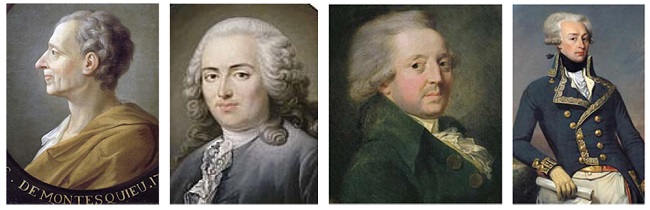
Key Philosophers and Their Contributions
- Voltaire (1694-1778): A fierce critic of the Church and absolutism. Voltaire championed freedom of speech and religious tolerance, embodying the spirit of the Enlightenment’s challenge to orthodoxy and autocracy.
- John Locke (1632-1704): Locke’s theories of individual liberty and the social contract laid the groundwork for modern democracy, influencing both the American and French Revolutions.
- Jean-Jacques Rousseau (1712-1778): Rousseau introduced the concept of the general will. And emphasized the importance of education in shaping free and virtuous citizens, influencing educational theory and practice.
- Immanuel Kant (1724-1804): Kant’s call to “Dare to know!” (Sapere aude) encapsulated the ethos of the Enlightenment. It advocates for autonomy and the critical use of reason in all areas of life.
Enlightenment Ideals and Their Impact
Political and Legal Systems
The Enlightenment’s emphasis on reason and the rights of the individual had a seismic impact on political thought and institutions. The notion that sovereignty resides with the people led to revolutionary ideas about governance and the structure of society. It was culminated in the American Declaration of Independence and the French Declaration of the Rights of Man and of the Citizen. These documents and the revolutions they inspired set the stage for the spread of democratic ideals and the establishment of constitutional governments.
Scientific Exploration and Innovation
The scientific rigor of the Enlightenment paved the way for groundbreaking discoveries and inventions. The period’s emphasis on observation, experimentation, and the questioning of traditional knowledge led to advances in medicine, physics, chemistry, and biology, laying the foundations for the modern scientific method.
Cultural and Social Evolution
The Enlightenment fostered an environment where inquiry and debate flourished, leading to significant developments in literature, arts, and education. The period challenged traditional social hierarchies and norms, advocating for equality, freedom of thought, and the importance of secular education. This cultural shift towards valuing individual achievement and meritocracy can be seen in the rise of the novel as a literary form and the establishment of salons and coffeehouses as centers of intellectual exchange.
Enlightenment’s Legacy in the Modern World
The ideals of the Enlightenment continue to influence contemporary society and our approach to scientific inquiry. The principles of liberty, equality, and fraternity remain at the core of democratic societies. On the other hand, commitment to reason and empirical evidence drives ongoing advancements in science and technology.
However, the Enlightenment’s legacy is not without its critics. Some argue that its emphasis on reason has led to the marginalization of emotion and the spiritual, while others contend that the pursuit of progress has contributed to environmental degradation and social inequality.
The Age of Enlightenment was a pivotal era that set humanity on a course towards greater freedom, knowledge, and innovation. Its philosophers challenged the world to think critically, act ethically, and embrace the potential for progress. As we continue to navigate the complexities of the 21st century, the Enlightenment’s call to reason, liberty, and the pursuit of happiness remains as relevant and inspiring as ever, guiding us toward a more enlightened future.


