For many species, solitude is not a social failure but a refined survival strategy. Solitary behavior in wildlife is often misunderstood when viewed through a human lens. In the wild, being alone can mean efficiency, control, and dominance over one’s environment. For solitary hunters, isolation is not loneliness. Isolation is energy conservation, tactical precision, and evolutionary advantage.
The Strategy of Chosen Solitude
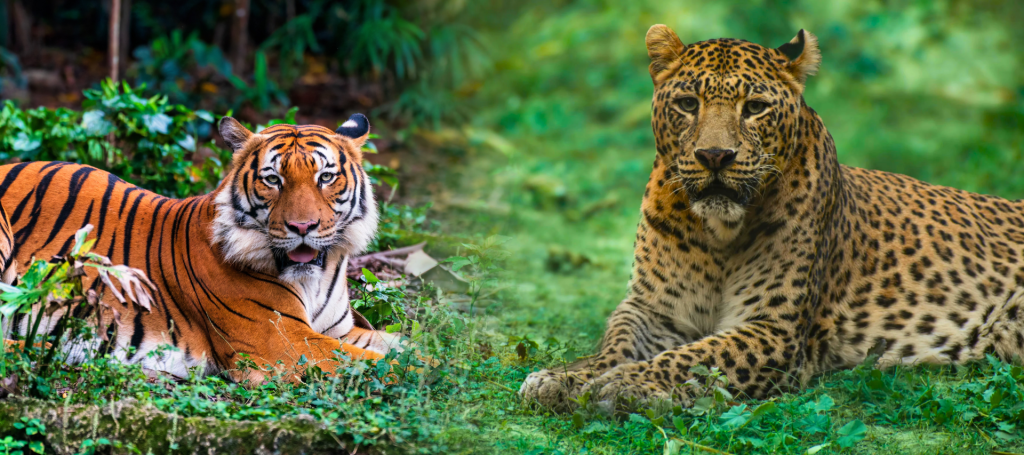
Animals such as leopards, tigers, and polar bears demonstrate classic examples of solitary behavior in wildlife. These predators thrive in independence. Hunting alone reduces competition for food and eliminates the need to share limited resources. For these animals, solitude is not a disadvantage but an evolutionary strategy that maximizes survival.
Their territories are carefully defended, their movements deliberate. Silence is a part of their survival strategy.
In such species, solitude is biologically programmed. Social bonds are minimal outside of mating or raising young. Once offspring are independent, separation is expected. For these animals, to be alone is to function optimally.
Yet solitude does not always serve survival.
When Solitude Signals Disorientation
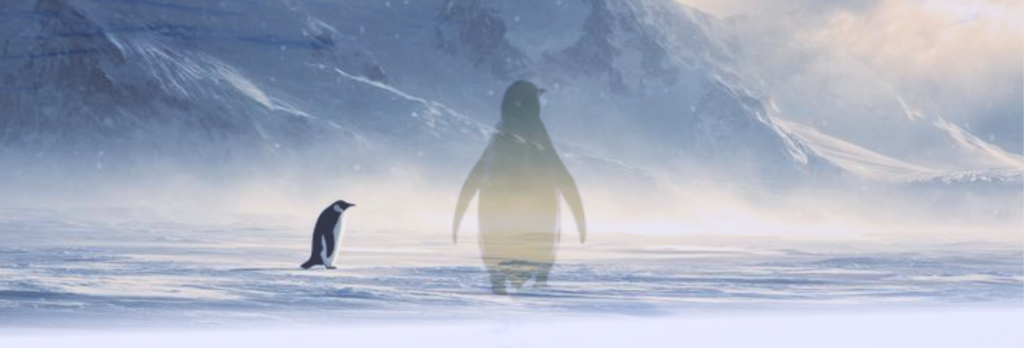
Not all forms of solitary behavior in wildlife are beneficial. A viral clip from a Encounters at the End of The World showed a lone Emperor Penguin standing motionless while its colony marched toward the sea. Eventually, the bird turned away from the group and began walking toward the barren mountains.
Scientists caution against anthropomorphism, which is the projection of human emotions onto animals. Still, the imagery struck a global audience as a symbol of grief and despair.
Penguins are profoundly social creatures. They rely on coordinated group movement for protection and depend on bonded partners for breeding and chick-rearing. When a mate is lost, the surviving partner can experience severe disorientation. The penguin’s decision to “choose a different way” is unlikely to be emotional resignation; rather, it may reflect a disrupted internal compass. Without the social anchor of a partner or the magnetic pull of the colony, the individual becomes both a literal and metaphorical outlier, wandering into an environment where survival is nearly impossible.
Here, solitude is not strategy. It is vulnerability.
Forced Isolation: The Biology of Alienation
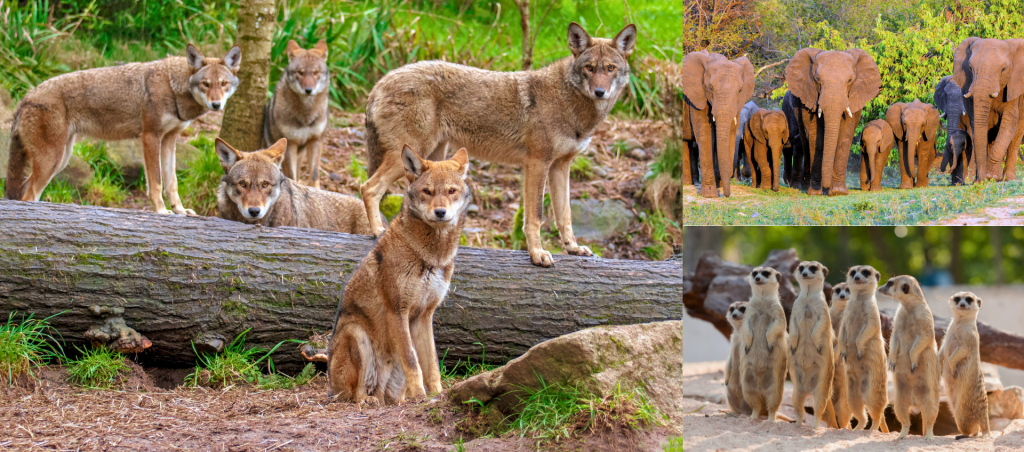
In stark contrast to chosen solitude, alienation occurs when naturally social animals are pushed into isolation by their own kind. Unlike solitary behavior in wildlife, which is often adaptive, forced isolation is rarely voluntary and can carry severe biological consequences.
Species such as wolves, elephants, and meerkats depend heavily on group cohesion. Cooperation provides defense, food acquisition, and reproductive stability. When an individual is ostracized due to illness, weakness, or a challenge to the established hierarchy, the expulsion can serve as a protective mechanism for the group. By removing a sick or disruptive member, the collective safeguards its genetic health and social order.
For the outcast, however, the outcome is often grim. Isolation dramatically increases vulnerability to predators, starvation, and stress-related decline. In social species, separation can function as a form of “social death.”
The Case of Punch: Social Hierarchy and Exclusion
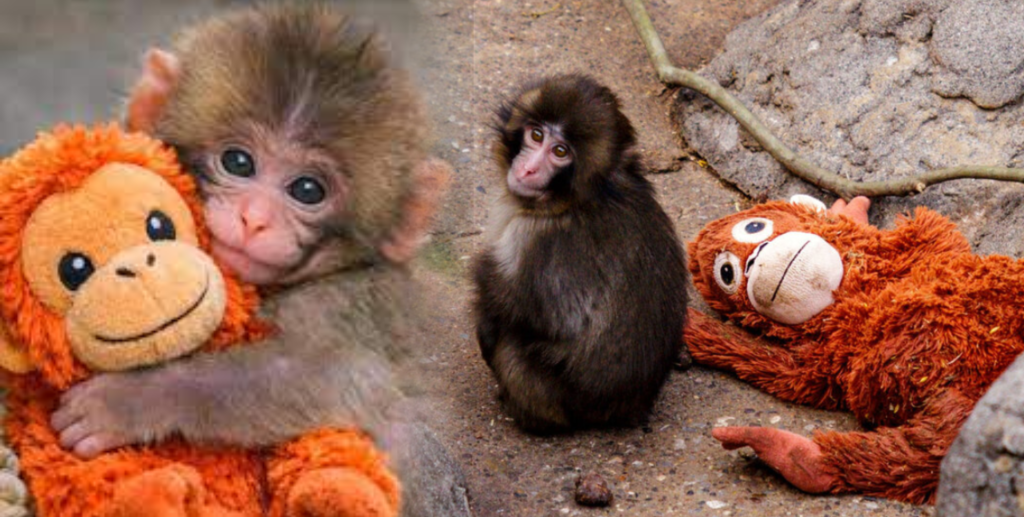
A striking example of forced alienation emerged in the story of Punch, a baby Japanese macaque at a Japanese zoo. Punch became a viral figure not because of independence, but because of exclusion. Videos frequently showed him sitting alone while the rest of the troop ignored or bullied him.
In macaque societies, hierarchy is rigid and matrilineal. Social rank is typically inherited from the mother. If a mother occupies a low position in the hierarchy or cannot defend her infant, the offspring may be marginalized. Punch’s isolation was not a case of solitary behavior in wildlife as an adaptive strategy; it was structural exclusion. His story highlights the darker mechanisms within social species where cohesion is maintained not only through bonding, but also through shunning.
The Biological Divide
The distinction between solitude and alienation ultimately lies in evolutionary programming.
For solitary predators, solitary behavior in wildlife enhances survival. Silence is sanctuary. Independence is strength.
For social species, however, isolation can represent disorientation, displacement, or rejection. The viral stories of the wandering penguin and the excluded macaque bridge scientific observation and emotional resonance. While we must avoid projecting human narratives onto animal behavior, these cases reveal an undeniable truth: for social creatures, connection is not optional, it is a biological necessity.
For the solitary leopard, the quiet savanna is home.
For the penguin without its colony and the macaque without its troop, the silence of the crowd can become a death sentence.